 Peptide Medix
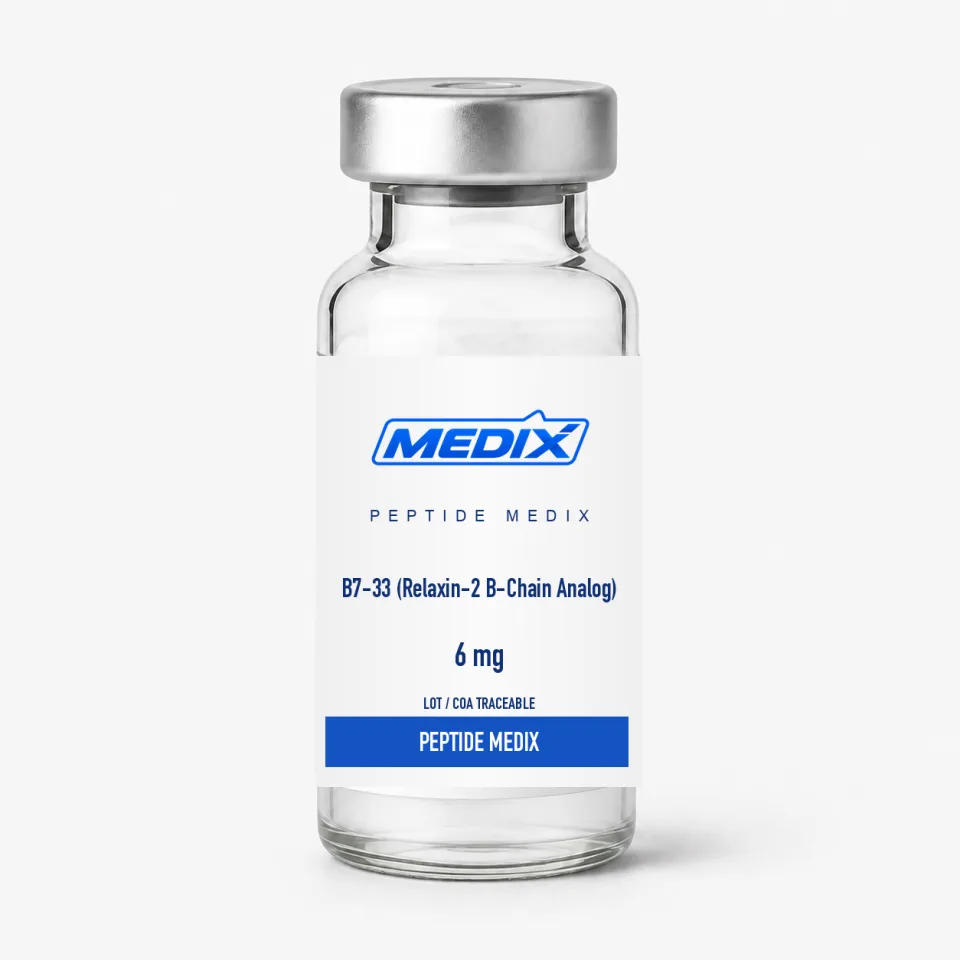
B7-33 (Relaxin-2 B-Chain Analog)
Linear 27-residue relaxin-2 B-chain analog studied as an RXFP1 agonist
Tap I use this — we'll set up your dose, reminders & journey in 30 seconds.
B7-33 is a synthetic, single-chain peptide derived from the receptor-binding region of the human relaxin-2 B chain. Its 27-residue sequence retains the arginine-rich motif used by relaxin family peptide receptor 1 (RXFP1) while avoiding the two-chain, three-disulfide architecture of the native hormone. The name records that span, corresponding to positions 7 through 33 of the B chain, and because the sequence carries no cysteine it requires no oxidative folding step. The result is a linear research analog that is easier to synthesize and characterize than full relaxin-2. The pharmacological interest is in what a single chain does to receptor signalling rather than in simply reproducing relaxin activity. Published work at RXFP1 describes the analogue as biased, favouring one branch of the receptor's output over the cyclic-AMP-dominated profile reported for the native two-chain hormone, and that difference is the reason it is run against relaxin-2 rather than in place of it. The assays follow from the fibrotic biology of the axis: fibroblast and myofibroblast culture, collagen and matrix metalloproteinase expression, and cardiac, renal and vascular remodelling models. A single 6 mg fill is stocked, held sealed at −20 °C, with working stocks refrigerated for a defined window and aliquoted rather than frozen repeatedly, and buffer compatibility validated per assay.
- Peptide
- B7-33
- Strength
- 6 mg
- Package
- 6 mg
- Purity
- ≥99% by HPLC
- Form
- vial